
Exploration and Discovery; Life and Mind

Our experience is made possible within a perceptual framework

Sequences of revelations in each of our unfolding journeys through experience carve a perspective – a refractive prism, that is, in its nature, unique.

It is worth considering that daily life (via attention and focus) includes, within ordinary human capability, the scope to navigate toward preferable states of being.

  • In early life, a chorus of domineering assertions with tendencies towards recrimination and being on the bitter side demanded attention. In the event, their relentless predictions of doom made themselves heard within the array of data with which any human is saturated. These predictions took on a higher power when, on the side of ‘reality, their unhappy story of life in disappointment seemed to be confirmed by the unfolding of life circumstances, particularly for others more beloved.
  • Being drilled with such messages, and then witnessing events that seem to corroborate them, gives form to fears that they may, against all that one could wish for, be right. or actually laid claim being true; truth was never mentioned. Their claim was, intrinsically, to being right, a form of ‘rightness’ that reaches for the baton of command and control. 
  • Bitterness becomes enshrined as a doctrine; an unholy scientism feeding on the trappings of what is asserted as the inevitability of failure.

When one is young, one often have to defend one’s desire (to oneself) against the impression that it is untested. It (desire, preference) can stand – seemingly alone – almost drowned in the vast sea of greater experience and authority claimed by elders.

What is surprising now, in retrospect, is that all the various approaches to liberation from this imposing doctrine of bitterness that I have been interested in so far ‘actually work’, in the sense that with very little in the way of effort, external conditions improve as well as there being an improved sense of personal ease and wellbeing. Eg, with easing of our perspective and thinking on a subject, be this through a meditative practice, a relaxed prayer in grace (not in begging need), an invocation of higher mind towards a liberating aim, external conditions change along with the reduced internal strain. Problematic situations begin turning around, persecutors ease up and new opportunities for creative endeavour burgeon.

These assertions can be tested – one by one for evidence of their validity, such as incremental, relative movement towards wherever, however, whatever one wants to be, feel, have, or do.

What remains is the re-conditioning of one’s habits of reasoning based on the coherence of fresh ideas of how life, material and mental, actually unfolds beyond what current norms (scientisms) may say. Scientisms to the extent that they are untested. What we call science takes on the burden of proof.

Each person’s norms are constituted by the impressions that they have been exposed to and are, thereby, conditioned to continue bathing in. It seems to take a certain ‘critical mass’ of consistent impressions, some incremental (context) and some sudden (foreground), as in shock or mystic revelation to launch a particular way of seeing things into a particular supreme dominance, for good or for ill.

Even trauma, which includes shock, there is still the ‘all that has gone before it’ – been heard, experienced, feared, anticipated – that will have created the preconditions for the particular constitutive shock to be subjectively experienced and then to take root as unbearably and unforgivingly ‘Right’.

So, becoming ill takes consistent experiences oriented by focus on unwelcome perceptions. Equally, becoming well calls for its own critical mass of reaching for and finding what is desired.

Meditative practices, breathing, invocations, mantras, ROMBI puzzles or other forms of structured handplay, play per se, all allow respite from the dominance of an imposing unwanted object In psychoanalysis, we call this imposing, unwanted object Super Ego – it berates and scorns us and all that we cherish. This incessant experience of imposing, unwanted ideas  (thoughts) has mortifying effects, mentally and, where critical mass is sufficient, symptoms present in material form too. Respite from this is necessary so that the creative force of life can take shape in forms that we can celebrate. It is the contours of the superego that fixate the forms that captivate us in chronic mourning. 

Extending respite (pausing of attention to the disappointments of the super ego) through a moment by moment focus on something else, in appreciation, in wonder, in curiosity, in rest; in any case, (increasingly) towards things that excite subject’s desire, however banal – even window shopping, allows for the flow of life oriented by desire to resume.

The key is to cultivate our consistency of attention to those interests in whose value we have come to believe, based on our own preferences.

Belief holds a decisive role. 

To the extent that belief supports desire, then that is the ideal basis for seemingly miraculous unfoldings.

To the extent that the force of belief contradicts desire, this will be the extent of compromise, tension and inhibition of desired outcomes and the lethal effects that flow from this. The source of desire is life itself and thereby its force is unceasing. Desire as we commonly experience it, taking on a myriad of forms is also unceasing.

Desire is the means by which we engage in the play of life, the means by which we can know what the next logical step is from our own unique vantage point, given the conditions and opportunities that we perceive in any given moment.

As perceive an obstacle in our way and cannot see another way through, desire’s unceasing assertion may take the form of aggressive display. When this is barred too, aggressive impulses may escalate to violent ones. This seems to be an unfolding of the natural order of life.

Betting on Desire. 

Personal discovery of the materially creative force of desire in and of itself is vitalising. It is within what we currently think of as ordinary human capability. It is not technically difficult to access, and positive effects begin to flow very quickly, some on the same day. The only condition is our willingness to dip our toe in the waters of possibility; to simply give it a try; again and again and again. Our work, then, is in the ‘healing of the will’, ie, steadily easing out our unwillingness to take a risk with – to bet on – our desire.

Various authors and speakers have told us that, we get what we think about, whether we want it or not.  It appears that the focus of our thought gives form and actualises the potential of our experience. From this perspective, confirmation bias is not an unfortunate accident in the human condition but an underpinning principle in the perceptual and material of our experience of the world.

We can harness this confirmation bias to work in our favour; taking our bearings from desire and bringing into being more of what we would creatively want for ourselves, for others, for our environment, whatever!

The decision is ours to make in each moment to moment, given where we are, in which direction we want to turn our attention.

Education! Education! Education!

Your education is a lifelong affair!

Your greatest teacher is life itself. Being open to your innate intelligence, your body, your mind and the opportunities life offers each day, even through difficulties, you cannot fail to discover wonders that you could not have otherwise imagined.

Whatever you believe of a situation is decisive in determining your experience of it. If you believe it is possible, you will remain open to its unfolding whatever it takes. If you believe it is impossible, for you it will be so.

A young woman contacted me today on Linkedin. Following her early experience of life, she has created an orphanage in her home for 12 children. She is also placing other children with families in her village. In our brief exchange, she tells me that she is involved in outreach programmes and fundraising to create new schools.

Facilitating education is a key part of my work, and our real education is happening all the time, any place, anywhere. The question is how to get the most of our experiences, seeing them as opportunities for adventures of discovery, readying us for the next one, and the next one….

This young woman’s dream of a better life and education for her children inspires me to write this piece and share it with her and with you.

The School of Life is here, wherever you are.

Here are some principles:

  • It is vital to know that you can accomplish anything when you decide to do so. Despite popular myths regarding the limitations created by differences in innate ability, much can be accounted for by differences in attitudes and experience. Innate ability is vast, we just don’t realise that and so we don’t try to express it.
  • Understanding how we learn. This allows us to start and proceed in a way that enables us to do what we want to do.
  • Perception as Interpretation: Whatever the instruction we receive, we interpret the message and make our own meaning of it. Each message is processed through the lens of our perception, framed by our individual experience and beliefs so far.
  • Learning from Others: As children, an influential part of our learning comes from impressions and ideas from others through what we learn from our earliest carers and teachers. We also need others in our continued learning but we can consider others in a different way as we grow.
  • Experimentation is where the adventure of life begins. To make the best of our lives as we grow, we need to be building our own real understanding in an ongoing way. We cannot endlessly take the opinion of others as fact. This doesn’t mean endlessly criticising others either. It means being aware that we are working with knowledge given by another. When that works for us, we can continue. When it doesn’t, instead of feeling afraid, we can know that we have the option to test out ideas for ourselves and discovering what happens.
  • Openness and Practice. Even the best ideas are not always reproducible, with many factors discreetly influencing outcomes. There is nothing that we cannot accomplish with openness and practice. Each experience, even each challenge, can help us to develop a finer and finer sense of what works for us and what doesn’t, all the while opening new horizons.
  • You, your Mind and your Body.  The elements entailed in effective learning (ie the ability for relevant application of knowledge) are not always well understood. In the most simple terms, directed by desire, our mind builds concepts in the best way it can using the tools available within our experience.  (All sensory and extra-sensory information is filtered through the prism of perception, which includes our emotional response.) Significant resources come from how we use our bodies in movement, and in interaction with our environments. These experiences are necessary for putting our ideas into practice, even in the simplest everyday situations. Without these, we may be inhibited in our ability to take our ideas further. Alternatively, we can realise that we can employ or collaborate with others in order to include these qualities.

These elements are at the root of anything else that we want to learn, including languages, mathematics, science, history, dancing, musical instruments, you name it…

Putting the preparation in place is a smart investment to being able to do what you want to do more easily and with increasing finesse.

Are you ready to start? 

YES?

OK. Here are some practices that you can use to irrespective of

  • Age,
  • Physical or Mental Condition,
  • Educational Level
  • Career Level

1 – Meditative practice

  • 15 minutes per day
  • Start your day with a moment of stillness. 
  • Preferably in the morning before you do anything else.
  • As far as you can…sit, preferably crosslegged, with your spine straight but relaxed,

Here is a video example to get you started – Isha Kriya

2 – A ROMBi Puzzle a day

Rombi_198   (Requires use of eyes and hands)

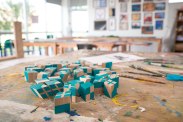
ROMBi is specially designed for extending capability by improving perceptual organisation. It starts to work with your first puzzle! ROMBi Puzzle

For using puzzles to improve your capability, remember that the priority is to

  • Do a puzzle before any task that you find challenging.
  • Consistency brings bigger benefits – a puzzle each day;
  • Practice makes you faster;
  • For great developments try more than 1 puzzle a day. One user who had spine surgery a couple of years ago does 3 puzzles in the morning with his coffee (10 minutes) before taking an 8km walk along the seashore!

ROMBi is a great investment, but if you are not able to afford it just yet, you can begin with an online jigsaw service: JIGZONE

A physical object in the hands is preferable to online versions, as it engages the body in space and time in unlimited directions. If you find puzzles difficult, this is a good indication that you will benefit from these kinds of exercises, as the difficulties will be affecting other aspects of your life and it doesn’t have to remain that way. Start with simple puzzles, you can use children’s puzzles.

3 – Juggling

Learning to juggle will simultaneously improve your mental as well as your physical coordination. It brings clarity and dexterity. It doesn’t matter how many times you drop the ball, practice and you will see sudden changes in your ability to think, imagine and move! Here is a video to get you started.

If you find this difficult to begin with, do a ROMBi or other kind of puzzle first and notice the differences.

4 – Step Dancing 

Waltz, Salsa, Tango, Cha Cha, Rumba, etc are among the

Dances that require you to practice a structure that repeats organise your mind and body in a coordinating way. There is no dance that you cannot master if you practice. After a certain critical mass of exposures to the experience ( practice, practice, practice), there will be a sudden jump and you will simply get it.

This will have effects of opening your body and mind to being able to organise other things more easily too.

5 – Playing Musical Instruments

Start with the beat, or get taken by whatever instrument excites you. The key elements are practice, so that you get to know your instrument intimately, get the feel of it and what it can do.

6 – Rule-based games

Finesse your fine and gross motor coordination, enhance perceptual organisation.

Court or Pitch – eg

  • Baseball
  • Football
  • Basketball
  • Tennis
  • Volley Ball

Board games – eg

  • Drafts (Checkers)
  • Chess
  • Backgammon

If you want to enhance your abilities, all of these things make a big difference on one condition, you actually do them regularly. 

Transformation and Transcendence

Ground-work for De-escalating Trauma and Re-Orienting life towards Desire.

Human suffering as I understand it is accompanied by a subjective disorientation.

For simplicity and coherence, this is best viewed from the subject that is I. In suffering, the ‘I’ doesn’t have a clear sense of itself, or

  • what is happening or why it is happening;
  • if a solution is possible for ‘me’ at all – (it may be possible for others but not for me);
  • where to begin to move toward solutions if they are possible for ‘me’;
  • feels exhaustion (despair) at the prospect of the difficulty of such a movement.

In human experience, we can often go through a great deal of exertion, strain, pain and hardship but not necessarily experience ourselves as suffering. As I have come to understand it, suffering has the quality of being in some way ‘intolerable’, a feeling of imposed on the subject, the ‘I’ against their will or consent.

There may be many questions arising from this, but first let’s be clear about the kinds of ways forward that in my experience can actually make it easier for us to find and to actually make movements in the ‘right direction’.

Cultivating the soil for lasting transformation – some basic recommendations:

  • Meditative practice – A few minutes a day of some form of daily breathing meditation, whatever other treatments are sought, is beneficial for physical and mental wellbeing.
    • Meditation here is understood as resting in stillness, focus on the breath and defocus on language (voice) based thinking. (de-focus on meaning)
    • As language-based thinking rests, this allows inspiration to inform experience in new ways.
  • Some Links for Isha Meditative Practices:
    • Isha Kriya is available online. Daily practice 15 minutes.
    • In-person Isha programmes:
      • Inner Engineering
      • Shambavi Mahamudra – twice daily practice 21 minutes plus warm-up stretches. Realignment of mind, body, energy and emotions
      • Bhava Spandana – an experience of life from another perspective.
      • Shoonya Kriya – 15 minutes twice daily practice – cultivating stillness.
      • Shakti Chalana Kriya – energising, self-healing
      • Sathsangs occur regularly in many cities.

Facilitating Perceptual shifts, without content:

  • www.Jigzone.com –  online jigsaw puzzles – Free. Helpful for giving structure to thinking, especially before study. For further study resources see Preparation for Study page on http://www.Access-1st.co.uk
  • ROMBipuzzle – A wooden block puzzle custom-designed for laying the ground for perceptual shifts through structured handplay, which gives thought access to new pathways beyond fields of trauma. Gives the information processing aspects of the mind the structural tools with which to organise information in more coherent ways according to desire. See blog articles on Rombipuzzle website for more details of how this helps.
    • Penny Georgiou – Author of AxisoftheStorm – is Director of the ROMBi Project

Talking Therapies:

Conversation towards clarifying desire, as informed by experience. Trauma raises vital questions. Clarifying where you stand* in relation to your experience is vital for deciding how to respond to the diversities of life now. *Where you stand will be informed by your desire, as the most intimate and, probably, the most inevitable part of you. Your desire in its purest form is life-affirming: it is that which delights you. Discovering what it has in store for you is a vital part of your life’s journey.

Jacques Lacan, Psychoanalyst and Psychiatrist, (see ‘British Psychiatry and the War’ Lacan, (1947) asked, ‘Have you acted in conformity with your desire?’ Lacan met with Wilfred Bion and John Rickman after WWII, British Psychiatrists working with soldiers presenting with shell shock (PTSD). Note the idea of the leaderless group.

It is along this axis of acting in conformity with one’s desire that a human being can be said to be happy. It is on the basis of desire that a human being can find inspired leadership within him/herself and be in a relationship to others that needs no recourse to domination; either as subject or object. The question then arises as to what are the best means of extending awareness to be informed by desire and the capacity to accordingly.

There are certain to be others, but I am mentioning here ones that I have experience of.

The principles are about the movement of thought beyond (improving on the formulation of) current beliefs and ways of thinking that produce distressing emotions. Why? Because however true our thoughts may be, if we were thinking correctly about an experience, it would produce a sense of relief and movement in desired directions, not deepening distress.